Save Percentage vs the Experts: Round one, introduction of concepts

Photo Cred: Eric Hartline-USA TODAY Sports

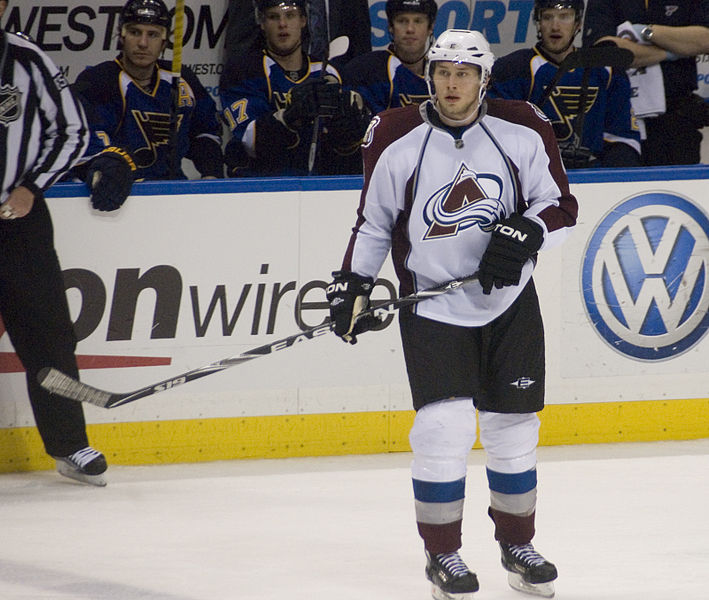
Due to starting my dive into hockey statistics as a Winnipeg Jets fan, save percentage has always been a pretty big interest of mine, specifically in what it can and can’t tell us. The truth is, it is still a pretty rudimentary statistic and likely will be improved upon in the future. However, simple does not always mean bad or useless.

Of the three most common “goaltender statistics”, save percentage is the one controlled most by goaltenders. How can I be so sure of that? Well it can be provided with simple logic.
Continue reading

Friday Quick Graphs: Toronto Maple Leafs, Chicago Blackhawks, Edmonton Oilers, and Boston Bruins Shot Distributions, 5 Years

What you see above are the even-strength shots-for locations for the near-indisputable top team of the last five seasons (Chicago Blackhawks) versus the near-indisputable worst team of the last five seasons. This is a sort of visual anti-shot quality argument, a demonstration of why, across these five seasons, the indisputable #1 team would shoot 9.9% while the indisputable #30 team would shoot 9.6%. Notice the horseshoe design, about where defensemen normally sit, then jump up into the play. Notice the dense cluster around the high slot. All teams make these plays, try to make them, the difference being some are better at possessing and moving the puck to make the shot. What’s the primary difference above? The amount of shots.

None of the above charting is possible without Greg Sinclair’s awesome site, Super Shot Search. Bookmark it, use it, love it.

Oh, hey, what if I was to look at the teams with the best and worst save percentage these last five years? Would they look different in even-strength shots-against? Well, let’s see, Toronto and Boston:

There is a difference here, I think. I mean, the initial difference are the numbers, Boston’s SV% (92.1%) versus Toronto’s (89.5%). Another difference is it seems the two charts maintain roughly the same shot distributions, but flip ends of the rink. Not much to dwell on there. One thing I will say, that could relate to the SV% discrepancy, is that it doesn’t appear that Toronto records many, if any, shots from right along the boards. Now, I don’t know if this is a recorder’s error or not; it seems to me it’s pretty hard to get a shot from right tight along the boards. Maybe one recorder does it based on where the body of the skater was located, I don’t know. Or…Toronto does allow shooters to come in a little tighter, and Boston owns the center ice a bit better. Could that explain a near-3% discrepancy? I don’t think so; we know Toronto’s had worse goaltending. But it might’ve “helped.”

On Guys Who Score But Don’t Drive Possession

This dude didn’t drive possession much, but MAN what a shot.

Consider four types of forwards:

1.  Forwards who don’t drive possession and don’t score points
2.  Forwards who drive possession forward and score points effectively
3.  Forwards who drive possession forward but don’t score points
4.  Forwards who don’t drive possession but score points.

The first two types of forwards are easy to think about: Type 1 forwards are bad players, not really giving value through their play and Type 2 forwards are the best type of players, those who provide value in both offense and defense and aren’t a liability if they ever go on a cold streak.

Type 3 forwards are a little trickier, but really aren’t that hard to think about – they’re your ideal 4th and maybe 3rd liner, the guy who might not score but keeps your team in the game while your better guys rest.

Then you have your type 4 forwards – the dudes who can score a bunch of points but really don’t keep the puck out of your own zone and in the opponent’s zone.  Perhaps these guys are really bad defensively, perhaps they’re completely inept in the neutral zone, or perhaps they’re guys who score mainly by being in front of the net at the right time, and thus aren’t really being helpful when the puck doesn’t come to them.

How do we value these guys?  Depending upon the point totals these guys can put up, we can value them pretty high actually.  Ilya Kovalchuk was a pretty damn good player who didn’t drive possession much, but his scoring almost certainly made up for what he cost the team otherwise.  Matt Moulson’s hands allowed John Tavares to rack up assists due to his amazing ability to be in the right position to put in goals.  Thomas Vanek likewise.

In a sense, these guys are basically role players.  Of course, that role isn’t being a grinder or a checker or some other name for defensive forward, it’s to be an offensive specialist, paying little attention to anything else.  You’d like to play these guys in positions that maximize that ability like any other role player – so high ozone starts, alongside guys who might complement those skills (playing them alongside guys who don’t have these weaknesses, and thus can make their line a plus possession line, is another typical way to handle these guys).  And scoring lots of points is a pretty important type of role for a player to have.

Most of the time, the best scorers don’t fall into this category – the skills involved with being a plus possession player are the same ones that lead to scoring goals – getting the puck into the zone by carry-in, spending more time in the O Zone, etc.  But a few guys will – think Ilya Kovalchuk or perhaps even the more recent version of Alex Ovechkin (though he used to be a clear driver of play).  These are guys you play as much as possible despite the possession problems simply because well – scoring is what wins games in the NHL.  These guys aren’t that common, so you’ll never see a low possession team dominate for multiple seasons like you did in the 80s (when three teams did accumulate such players).  But you play them anyhow and you try and surround them with a lot of plus possession talent to make up for their shortcomings.

Again, these players aren’t bad by any means – they can even be elite!  Of course, lacking possession driving skills means slumps by these guys will kill you, but for your Kovalchuk’s and Ovechkins, you’ll live with that.

NHL Team History, Possession, and Winning the Stanley Cup

Photo by “JulieAndSteve”, via Wikimedia Commons

Gabe Desjardins dropped a comment over at my Tumblr awhile ago, asking me if I could put together a graph expanding on a metric I came up with, 2-Period Shot Percentage (or 2pS%). 2pS% is an historical possession metric that takes shots-for and shots-against in just the first two periods of a game and expresses it as a percentage for the team being analyzed. The idea was that I was trying to get a rough possession measure from the period that would avoid score effects, or the tendency for teams with a lead to sit on the lead and thus give up shots late in the game. Having recently completed a database of period-by-period shot data going back to 1952-53, I have been able to test this metric a bit and the results were good for 2pS% as a possession measure. Returning to Gabe’s request, he wanted to know if I could chart the 2pS% data from year-to-year, with one line following the league leader in the metric and the other line following the Stanley Cup winner. I’d been curious about this myself; certainly there are a number of different ways to express the value of the metric, but this particular one could be interesting because it toes the line between what the Old and New Guard feel is important in this kind of analysis.

Well, I was right that it would be interesting:
Continue reading

NHL Career Charting: The Pre-BTN Era and What We Can Still Do With Historical Data

File:BrendanShanahan.jpg

Photo by “IrisKawling”, via Wikimedia Commons

Hockey statistics have always been fairly historically limited; most of the so-called “fancy stats” have only been tracked (and easily track-able league-wide) back through the 2007-08 season. The prior years have a veil of fog over them, though there is fairly decent shot data going all the way back to the 1952-53 season (thanks to the Hockey Summary Project; I’ve been able to bring the data together), good game-by-game individual player data going back to 1987-88 (thanks to Hockey Reference via Dan Diamond & Associates), and gradually-improving TOI data going back to 1997-98 (thanks to NHL.com and Hockey Reference). Unfortunately, this has lead to a relative dearth of research into the years of the “Pre-BTN” Era, so-called because 2007-08 was the first year we received in-depth, league-wide data from Gabe Desjardins’ Behind the Net stats site and Vic Ferrari’s timeonice.com.

Having a background in history, and also having grown up as a fan of the league in this grey statistical era, I have spent the last couple years trying to compile and present statistics from the Pre-BTN Era in ways that can help provide a window into those years (and possibly inform our understanding of the present-day game). I’m somewhat indebted to Iain Fyffe, a guy who’s been doing similar yeoman’s work much longer than myself at Hockey Prospectus, though more recently he’s been sharing his work at his own site, Hockey Historysis.

The fact of the matter is that there is actually an enormous amount of information out there, and more importantly with graph work we can really do some interesting things. First case in-point is what I call “career charting;” essentially, charting a player’s shots in a game relative to their team’s shots in those same games. Using the metric %TSh, or percentage of team shots, this provides an interesting glimpse into player contributions, workload, and development in the Pre-BTN Era. Adding some artistic (and informational flourish), I present to you Pierre Turgeon:

Continue reading

Crystal Blue Regression: Leafs, Avalanche, Ducks, Among the Most Likely to Regress in 2014

Image

Picture taken by Sarah Connors, posted to Flickr – via Wikimedia Commons

With the Winter Classic coming up, or should I say the Winter Classics since the NHL handles marketing success like the kid who found the cookie jar, we also ring in the rough middle of the season. It’s a time for reflection, maybe a chance to re-assess your decisions, lifestyles; and if you’re analyzing the NHL, it’s the perfect time to recognize trends that may or may not continue. Also known as “regression,” here I’m dealing with a concept everyone understands to a degree; you invoke it when you see a friend sink a half-court shot in basketball and say, “Yeah, bet you can’t do that again.” The trend, supported by a history of not making half-court shots, suggests that it is unlikely for your friend to sink the half-court shot, even if they recently made one. In the NHL, possession stats like Corsi are considered better predictors of future success than stats that can be influenced more greatly by luck, like goals (and, consequently, wins), shooting percentage, or save percentage. Much like your friend and their half-court shot, there are teams that are defying their odds (established by possession measures) to succeed, which can easily happen with less than a half-year of performance.

Continue reading

Overemphasizing Context – A mistake just as poor as explaining context in the first place.

AMac Context

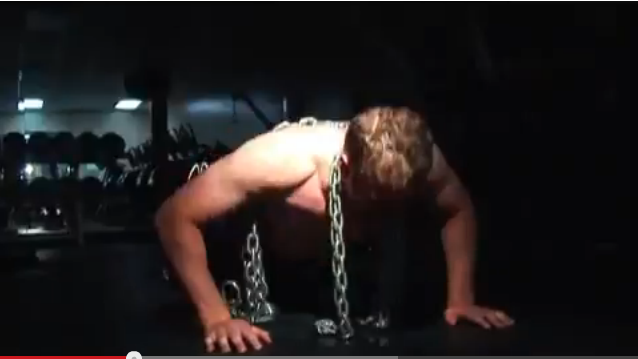
The only context that can explain Andre MacDonald’s performance is if he’s actually wearing these chains under his uniform.

Eric Tulsky frequently points out on twitter that common critiques of analytics people (whether it be hockey or any other sports analytics) tend to act as if those involved with analytics are kind of stupid and have ignored the obvious.  For example, people tend to respond to arguments involving corsi and possession by bringing up the obvious subject of context – “Sure he has a bad corsi, but he gets tough minutes!”  And the general response of course is, yes we have, and we wouldn’t be making these assertions had we not done so.   Hockey Analytics has come up with a multitude of statistics to measure context – Behind The Net alone has 3 metrics for quality of competition and 3 metrics for quality of teammates, plus a measure of zone starts – HA has multiple different measures for the same thing and so does now Extra Skater (with Time on Ice QualComp and QualTeam).

Continue reading

Consistency in the NHL: How much does consistency vary in the NHL relative to performance

Photo Cred: John Woods (The Canadian Press)

INTRODUCTION:

It is not unusual to hear fans or media claim lack of consistency in a team’s performance as the main culprit to a team’s failing record, rather than the alternative narrative in a team just not being as good on average.

Fortunately there is a way to test this hypothesis in mathematics, specifically statistics.

Corsi is one of the strongest gauges in assessing a team’s success due to Corsi’s strong relationship with scoring chances and puck possession, even within a single game sample spacing. This evaluator is even stronger when restricting to “score-close” minutes to limit score effects.

How well a team performs game-to-game on average can simply be evaluated using the average, or mean, of a team’s Corsi differential for all of their games. Consistency can also be evaluated mathematically using standard deviation, a measurement in the magnitude of dispersion from the mean value.

Continue reading