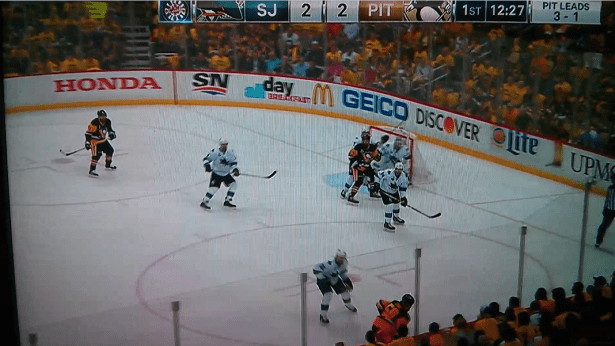
Video Analysis: How The Penguins Extend Zone Time With “Total Hockey”

2016-06-10_11-49-55.png

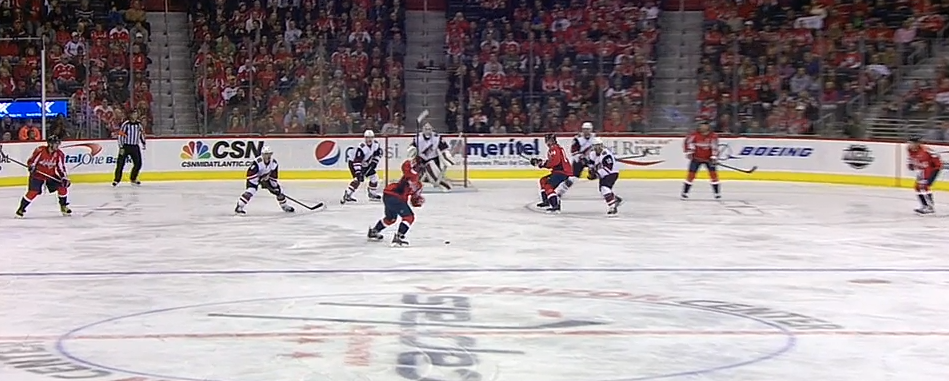
By any predictive metric, the Pittsburgh Penguins have generated a staggering amount of offense against the San Jose Sharks in the Stanley Cup Finals. Earlier this week, we looked at how the Penguins are able to create possessions with good defensive habits in the neutral zone. Today, we’ll examine how they create a volume of offensive chances via positional switches.

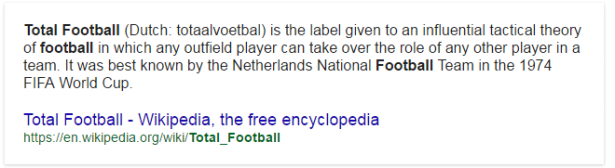
To fully understand the ideas behind the Penguins’ offensive zone play, it is necessary to study the “Total Football” philosophy:

2016-06-10_11-51-48

The line of thinking lends itself well to the speed and teamwork-oriented nature of hockey as well. While the Penguins are by no means the first team to apply these ideas, they are a good example of how they can be used effectively at the highest level of the game.

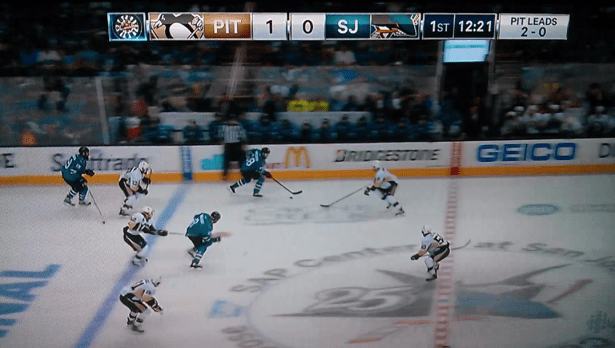
Here are some clips from Game 3 and Game 5 of the Stanley Cup Final illustrating the tactical benefits of fluidity and positional switches.

Continue reading

NHL Draft Probability Tool

donnie

SUNRISE, FL – JUNE 27: the Boston Bruins during the 2015 NHL Draft at BB&T Center on June 27, 2015 in Sunrise, Florida. (Photo by Dave Sandford/NHLI via Getty Images)

The annual NHL draft has become a great source of entertainment for fans. Since teams make player selections based on a combination of game theory and data, the draft is also a fertile ground for analysts as well. Game theory specifically is the foundation for the Draft Probability Tool that will be presented in this piece. It will help you explore how teams should approach the draft strategically: if you’re interested in a specific player, do you need to trade up or down to get him? How much should you be giving up or asking for? How far should you trade up or down to still get the player you value highly? This tool helps answer those questions.

Continue reading

Video Analysis: In the Penguins-Sharks Stanley Cup Final, Possession Starts With Good Defensive Gap

2016-06-06_18-49-40.png

In the playoffs, details make the difference.

Heading into Game 4 of the Stanley Cup Final, the Pittsburgh Penguin have had the measure of the San Jose Sharks in terms of shot differential. Looking at the game tape, we can see that one of the contributing factors is the way both teams defend the rush.

As a group, the Pens’ defensive corps is fleet-footed and blessed with good offensive acumen. They are also undersized and prone to being muscled off the puck by San Jose’s skilled forwards. In order to minimize their exposure to defensive-zone breakdowns and to maximize the team’s speed and skill, the Penguins have been playing a very tight gap across the neutral zone, funneling San Jose puck carriers toward the end boards and standing up at the red line in order to encourage the Sharks to dump the puck in.

A hallmark of the Mike Sullivan-coached Penguins is the team’s attacking mindset on and off the puck, as evidenced by the way they suppress the San Jose transition game.

Continue reading

How much is the “best fourth line in hockey” worth?

The New York Islanders agreed to terms Casey Cizikas to a five-year contract extension worth $3.35 million on average per year.

This extension sent shock waves throughout Twitter, Reddit, and discussion boards as it seemed to be a hefty price and term to pay for a member of the team’s fourth line. The Islanders were not without their defenders, though, with many pointing out the “best fourth line” label the trio of Casey Cizikas, Matt Martin, and Cal Clutterbuck are often given.

Prior to debating whether or not the Islander trio is actually the best fourth line ever (or even currently) in hockey, we should ask: How much is the best fourth line in hockey worth?

Continue reading

Genie Bouchard, Expectations & What Players Need To Understand About Stats

Embed from Getty Images

This post is not really about Genie Bouchard, or even tennis in general, but let’s start with her.

On Thursday, Bouchard, the top-ranked Canadian player on the WTA Tour, lost 6-4, 6-4 to No. 8 seed Timea Bacsinszky at Roland Garros. The loss could be interpreted as another setback for Bouchard, who ranked as high as No. 5 in the world in October 2014. Since then, she has slumped, going 12-18 in 2015 after winning 39 and 43 matches in the previous two years. What’s gone wrong?

Possibly, the answer is nothing at all.

Continue reading

Practical Concerns: On Randomness, Risk-Taking And Coaching

Screenshot_2016-05-16-13-09-59

Something I set time aside for during the off-season is reading non-hockey books in an attempt to gain a better perspective on hockey. The work of Michael Lewis (Liar’s Poker, The Big Short, Boomrang) and Nassim Taleb (The Black Swan, Fooled By Randomness) were of particular inspiration.

Below are some assorted thoughts based on recent readings and events. Tweet me (@ML_Han) if you’d like to disagree and tell me why. Eventually I hope to spend some time talking about this or a tangential at the second edition of RITHAC this September.

Continue reading

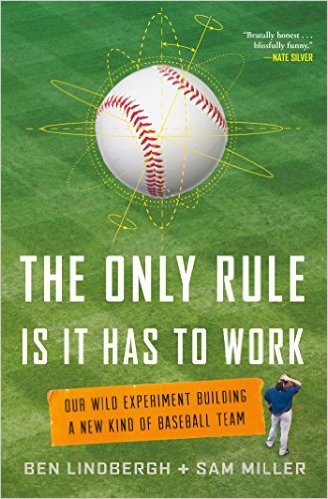
Book Review: Caveman Logic & “The Only Rule Is It Has To Work”

book

In my experience, using analytics to influence coaching decisions is a profoundly weird and incredibly interesting exercise, which is why I was very excited to read a book called The Only Rule Is It Has To Work, a newly released book written by Ben Lindbergh and Sam Miller, two Sabermetricians who took over a pro baseball team for a season.

Being a fast reader, I blasted through the pages in about two days. I’m happy to say that got a lot out of this book. If you’re here, you probably would too.

While I don’t know or care much about baseball, Ben and Sam are my kindred spirits. There are not many people who have had the opportunity to use analytics to directly impact how a sports team is run on a day-to-day basis. As I found myself leafing through the pages, I saw a lot of my own hockey experiences in the authors’ words.

Whether it was gaining the trust of the coaching staff, overcoming teething IT issues, or occasionally falling prey to heuristics and losing “objectivity,” I identified a great deal with Ben and Sam’s trials and tribulations. So much so, that I began tweeting at Ben before I even finished the book.

Continue reading

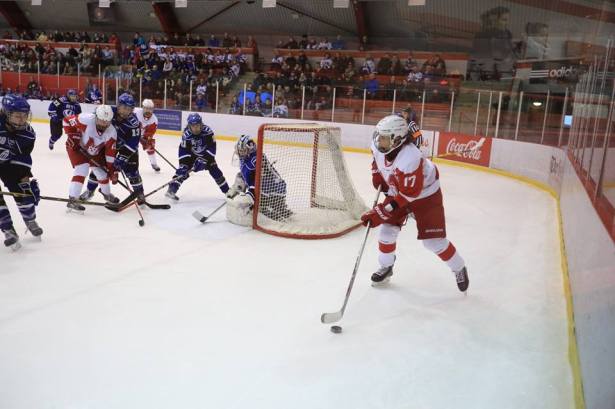
Practical Concerns: “The Blind Side”, Intangibles and My Off-Season Plan At McGill

mmm.jpg

(Photo credit: Derek Drummond)

At VANHAC, I was asked by a few people about how we use analytics in our program. Every season is different, and to gain a full appreciation of my intentions this summer, it’s worth digging into the central thesis of a football book.

What Really Drives Results?

“[Quarterback Joe Montana, wide receiver Jerry Rice and running back Roger Craig] are stars. They accumulated the important statistics: yards, touchdowns, receptions, completions. [Left tackle Steve] Wallace is not considered a producer. He has no statistics.” – The Blind Side: Evolution of a Game (Michael Lewis, 2006)

While Michael Lewis’ Moneyball did much to improve the popular understanding of analytics in sports, I happen to think that The Blind Side can help bridge the gap between traditionalist and numbers-driven analysts just as much as Moneyball did.

If you peel away the diverse storylines in The Blind Side, this is the central question behind Lewis’ book: What does a good left tackle do for his quarter-back (and by extension, their team)? And how much is that worth?

Very valuable, as it turned out. Unless an NFL team wanted your multi-million dollar quarterback seriously maimed by an opposing pass-rusher, it had better hire a left tackle with the size, speed and sense to keep up. The problem is, if this player does his job well, nothing happens that can directly be attributed to him – he has no statistics.

But conceptually, his impact on the game is not all that hard to identify. A good left tackle provides a safe, productive (and dare I say, fun) work environment for his teammates. By paying attention to the process of football, you can probably come up with a few good ways to account for that.
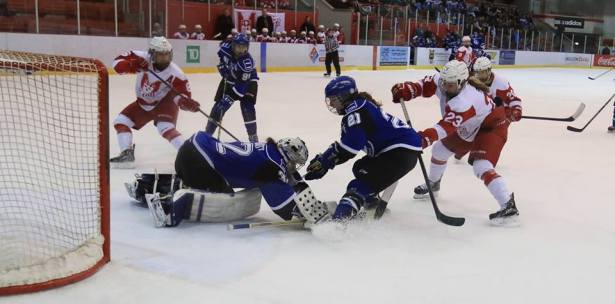
mmm2.jpg

(credit: Derek Drummond)

Building A Bridge

When you arrive to this conclusion about football players, it becomes a lot easier to see why the idea of “being a good teammate” and “having intangibles” matters to people working in hockey. I’ve alluded to this elsewhere, but there are really two aspects to creating that good working environment for other people – one can’t be expressed in numbers conveniently, but I reckon the other already can be. Both matter a great deal to the end result, and to how people feel in the process to getting there.

I didn’t have time to really dig into this during my talk at VANHAC, but this is probably the most important realization I’ve had in two years working for the McGill Martlets hockey program.

Continue reading

How Can We Quantify Power Play Performance In Formation?

Screen Shot 2016-02-26 at 4.55.31 PM

Last week I wrote about a new metric, ZEFR Rate, which measures zone entry success on the power play and is relatively repeatable and predictive of future goal scoring efficiency. The metric was based around the idea that getting into formation efficiently — most frequently a 1-3-1 — is a catalyst for power play success.

But now let’s say you’re a team that has perfected your entry scheme, and you find yourself setting up in formation at a consistent rate. What now? How can one maximize one’s use of possession in formation to score goals at the highest possible rate?

Continue reading