
Crystal Blue Regression: Leafs, Avalanche, Ducks, Among the Most Likely to Regress in 2014

Image

Picture taken by Sarah Connors, posted to Flickr – via Wikimedia Commons

With the Winter Classic coming up, or should I say the Winter Classics since the NHL handles marketing success like the kid who found the cookie jar, we also ring in the rough middle of the season. It’s a time for reflection, maybe a chance to re-assess your decisions, lifestyles; and if you’re analyzing the NHL, it’s the perfect time to recognize trends that may or may not continue. Also known as “regression,” here I’m dealing with a concept everyone understands to a degree; you invoke it when you see a friend sink a half-court shot in basketball and say, “Yeah, bet you can’t do that again.” The trend, supported by a history of not making half-court shots, suggests that it is unlikely for your friend to sink the half-court shot, even if they recently made one. In the NHL, possession stats like Corsi are considered better predictors of future success than stats that can be influenced more greatly by luck, like goals (and, consequently, wins), shooting percentage, or save percentage. Much like your friend and their half-court shot, there are teams that are defying their odds (established by possession measures) to succeed, which can easily happen with less than a half-year of performance.
Continue reading

Overemphasizing Context – A mistake just as poor as explaining context in the first place.

AMac Context

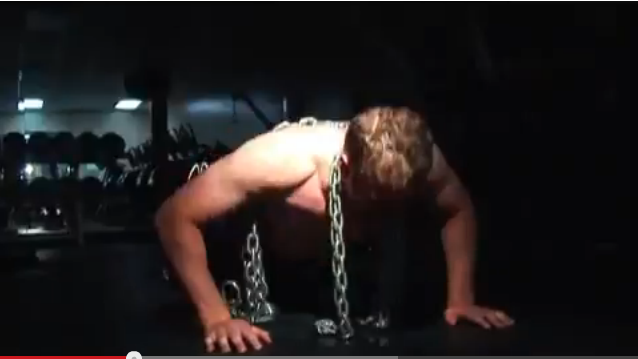
The only context that can explain Andre MacDonald’s performance is if he’s actually wearing these chains under his uniform.

Eric Tulsky frequently points out on twitter that common critiques of analytics people (whether it be hockey or any other sports analytics) tend to act as if those involved with analytics are kind of stupid and have ignored the obvious.  For example, people tend to respond to arguments involving corsi and possession by bringing up the obvious subject of context – “Sure he has a bad corsi, but he gets tough minutes!”  And the general response of course is, yes we have, and we wouldn’t be making these assertions had we not done so.   Hockey Analytics has come up with a multitude of statistics to measure context – Behind The Net alone has 3 metrics for quality of competition and 3 metrics for quality of teammates, plus a measure of zone starts – HA has multiple different measures for the same thing and so does now Extra Skater (with Time on Ice QualComp and QualTeam).

Continue reading

Consistency in the NHL: How much does consistency vary in the NHL relative to performance

Photo Cred: John Woods (The Canadian Press)

INTRODUCTION:

It is not unusual to hear fans or media claim lack of consistency in a team’s performance as the main culprit to a team’s failing record, rather than the alternative narrative in a team just not being as good on average.

Fortunately there is a way to test this hypothesis in mathematics, specifically statistics.

Corsi is one of the strongest gauges in assessing a team’s success due to Corsi’s strong relationship with scoring chances and puck possession, even within a single game sample spacing. This evaluator is even stronger when restricting to “score-close” minutes to limit score effects.

How well a team performs game-to-game on average can simply be evaluated using the average, or mean, of a team’s Corsi differential for all of their games. Consistency can also be evaluated mathematically using standard deviation, a measurement in the magnitude of dispersion from the mean value.

Continue reading