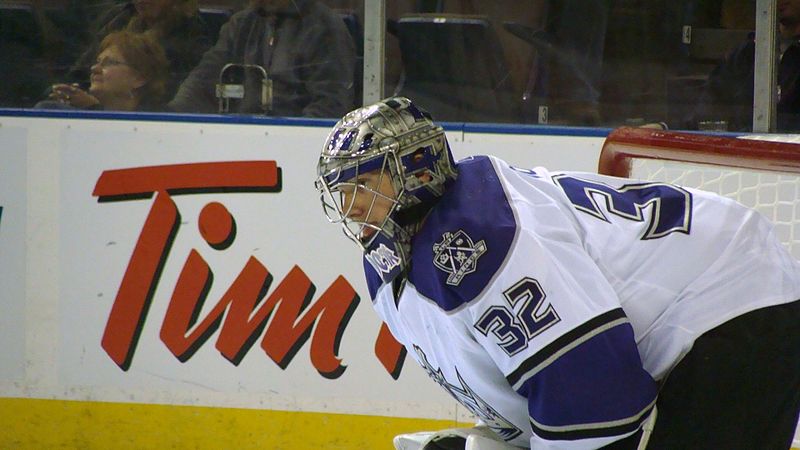
2014-15 NHL Season Preview: The Pacific Division

Photo by "Kaz Andrew", via Wikimedia Commons

Photo by Kaz Andrew, via Wikimedia Commons

Whenever I put together something as broad as a division preview, especially since the divisions have expanded, I usually try to slap something together that helps me get a quick impression of the teams as compared to one another. This time around, I put a little work into generating a 5v5 simulation of this coming season, specifically among the projected top 6 forwards, top 4 defensemen, and goaltenders. As 5v5 play comprises a little over 80% of all NHL gameplay, and these players tend to more consistently drive results (as players of around 3/5 to 2/3 of gameplay), focusing on their 5v5 performances from last year bring us to use a bit more stable indicators of future team performance. The quick-and-dirty approach here benefits from the fact that most of the Pacific lineups are quite similar from last year, and the top 6 and top 4 players tend to be deployed in the same roles from year to year. So, I took the average 5v5 Corsi-For% of the entire of the top 6 and top 4 for each team, the average 5v5 shooting percentage of the same group (for Johnny Gaudreau, I assumed a forward league-average 9%), and the career 5v5 save percentage of the projected goaltenders (for Fredrik Andersen I assumed a goaltender league-average 92.1%), and ended up with a projected 5v5 season that looked like this:
Continue reading

Gordie Howe vs. Bobby Orr vs. Wayne Gretzky vs. Sidney Crosby: Not Your Typical WOWY

Photo by "Djcz", via Wikimedia Commons

Photo by “Djcz”, via Wikimedia Commons

With or Without You analysis, often referred to as WOWY, frequently involves either comparing the performance of a team or particular players when a single player is and isn’t playing. While the approach is a risky one (sample size is a pretty big issue), it can actually be quite telling when you collect enough data.

The value of modern WOWY is that you can definitely get data from precisely the seconds a player played apart from the seconds they weren’t on the ice. Historical WOWY, on the other hand, cannot do much better than taking data from games a player played versus games they didn’t. To this end, then, I wanted to see if historical WOWY can tell us much of anything, and the best way to do that is to focus on players that are undisputed in their value. In this case, I went for WOWYs of the big guns, four of the best players across the eras of NHL history: Gordie Howe, Bobby Orr, Wayne Gretzky, Sidney Crosby.
Continue reading

Using NHL Coaching Changes to Identify Historically Good and Bad Coaches

Iron Mike no like. - Photo by "Resolute", via Wikimedia Commons; altered by author

Photo by “Resolute”, via Wikimedia Commons; altered by author

Having now looked at the overall effect a coaching change might have on a team, and identified some outstanding examples where a coaching change had a drastic impact on a team, it’s now time to shift over to some juicier matters. For the most part, I don’t think one coaching change is necessarily sufficient to say a coach is good or bad; there is a possibility the previous coach was just that bad. But if the coach returns the same signal a couple of times or more, you are probably getting closer to a true reading on what they might bring to the table.

Across the 140 or so coaching changes these last 60 years where both coaches led the team 20+ games, there were 69 coaches who were a part of that change twice or more (which, to me, is quite a remarkable number). The full list, followed by an explanation of the measures:
Continue reading

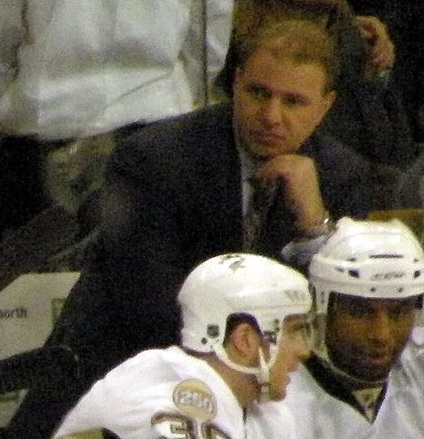
Where NHL Coaching Changes Did, and Didn’t, Help Their Teams

If you or anyone you know have seen this man behind your player, contact the front office immediately.  (Photo by "Dan4th Nicholas", via Wikimedia Commons; altered by author)

Photo by “Dan4th Nicholas”, via Wikimedia Commons; altered by author

Michel Therrien has an interesting distinction in the research I’ve been doing about NHL coaching changes: he’s given me 4 instances where he and his replacement have coached 20+ games within the same season. He’s also replaced or been replaced in three of those instances by legit coaching talent – he replaced Alain Vigneault for the Montreal Canadiens in 2000-01, was replaced two years later by Claude Julien, and lastly was fired in favor of Dan Bylsma for Pittsburgh in 2008-09. What’s incredible about these three cases is that, in every single one of them, there was a drastic change in outcomes for the teams involved. Using 2pS%, or possession measured by two-period shots-for divided by two-period shots-for and against together, the numbers tell a story:
Continue reading

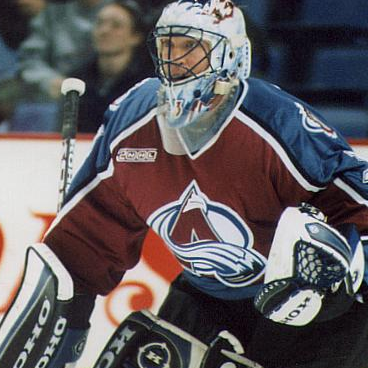
Who Were the Top Goaltenders of Each Decade?

Image from Rick Dikeman via Wikimedia Commons

Image from Rick Dikeman via Wikimedia Commons

I set out to measure the top goaltenders of each decade using a simple measure that adjusts for different environments of the years played.

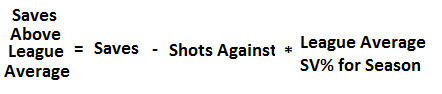
The measure used is Saves Above League Average which is a measure of how many pucks a goalie stops relative to league average from that season. It is computed as:

salaformula

I compiled the top 10 and bottom 10 for the cumulative totals for the decades and the most extreme single-season marks.

If you want to test yourself before looking at the results, I made them into Sporcle quizzes: 2000s / 1990s / 1980s

Continue reading

What to Expect When You’re Expecting: Does Switching NHL Head Coaches Make a Difference?

Bruce Boudreau

Photo by Matthew Miller, via Wikimedia Commons; altered by author

How good do you feel because your team has a new coach? I mean, really…it’s almost like a new-car smell. So many possibilities – This time, things will be different. With the exception of coaching changes due to disastrous, unexpected things, the typical hockey fan was ready for that moment, and were happy to see the coach go. But is that eagerness for change based on real results?

Continue reading

Defensemen still have no substantial and sustainable control over save percentage

For quite some time there has been a debate going on: those who think you should add a defenseman’s effect on save percentage into player evaluations and those who think that adding such information causes more harm than good to the analysis. Note that this does not mean defensemen do not affect save percentage. That is an entirely different stance.

When it comes to evaluating a player statistically, you want the number to account for two things: effect and control. If a statistic does not help quantify how a player improves their team’s chance at winning, it is useless in measuring effect. If a statistic has too much white noise or other contributing factors that it would take too large of a sample to become significant to the player’s contribution, it is useless in measuring a player’s control over the effect.

Continue reading

How Do Teams Use Their Top Defensemen

The following is a guest article written by Rob Vollman of Hockey Abstract and Hockey Prospectus fame. Enjoy!

Other than the goalie, a team’s top defensemen are arguably the most important players on the teams. Great ones like Nicklas Lidstrom, Scott Niedermayer and Chris Pronger can completely alter the outcome of an entire season almost single-handedly. Who were the top pairing defensemen this year, how will they used, and how effective were their teams when they were on the ice?
Continue reading

Evaluating Defensemen using their effect on both team and opponent Corsi%

Courtesy of Wikimedia Commons

Eric Tulsky has previously shown that defensemen have very little control over their opponents on-ice shooting percentages, by demonstrating the extremely low repeatability in the statistic. Recently, Travis Yost expanded on this revolutionary information with showing that on-ice save percentage repeatability is even lower when reducing the impact of goaltender skill level differences; which makes sense when a defender with Ondrej Pavelec is going to have a higher probability of repeating a low save percentage, much like the opposite would be true with Tuukka Rask behind them. This leaves a defender’s influence on shot metrics as their primary impact in improving the team’s chance in winning the game. Tyler Dellow then pushed it one step further by stating the best method of evaluation then is using a defenseman’s impact on a team’s Corsi%.

But, there is one other primary factor: how a defender impacts the opposition. The two are not exactly one in the same, even though they are related:

Continue reading

How Something as Important as Shot Quality is not that Important

Graph courtesy of @MannyElk

ABSTRACT

Shot quality versus quantity was once debated intensely in the hockey analytics blogosphere; however, this has since diminished severely. Still, many in the general public struggle with the idea of something that is important for players and teams to strive for doesn’t add much in data analysis. This exercise helps demonstrate some of the concepts using data.

Continue reading