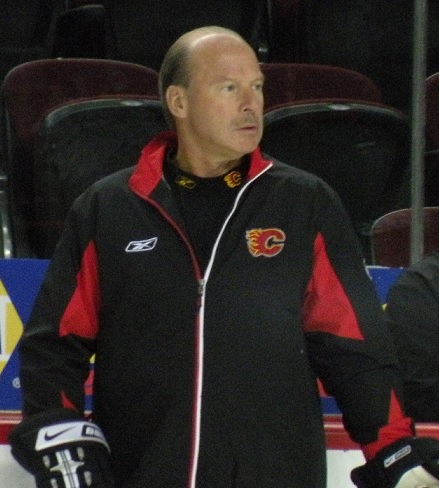
“Bruce-Alain Ruff. Looks like the ghost of Gene Hackman. You’re welcome for the nightmares.” Composite of images by “DSCF1837” (Vigneault), Michael Miller (Boudreau), and Arnold C. (Ruff), via Wikimedia Commons*
Systems are without question the most elusive, yet most important, part of our understanding of hockey and the application of analytics. What works and what doesn’t? To what degree can a coach or team apply a strategy?
This led me to think about where we might most convincingly see evidence of a system at work. In the past, we here at HG have had a lot of skepticism about a number of elements of a “system.” For example, Garik’s pieces on competition-matching lines (here and here) and the use of the “defensive shell” to protect a lead, neither of which presented themselves as particularly effective ways of looking at or implementing systems. I have shown in the past that attempts to use extreme deployment in terms of zone starts doesn’t move the needle beyond a 60-40 range of possession, the range of shooting shares for forwards and defensemen haven’t seemed to change much over the last 20-25 years, and a plotting of even-strength shots-for with top and bottom possession teams do not suggest a major difference in shot location.
So where to go from there? Eventually, I decided that we need to get to an extreme enough situation, with robust enough data, where a team might have the best opportunity to dictate a system — in other words, we need to look at the powerplay. The most ideal opportunity for comparison, given the workable data for me, comes from the coaching careers since 2008-09 of Bruce Boudreau, Lindy Ruff, and Alain Vigneault. They all provide at least a couple of seasons with different teams, in addition to a robust set of coaching data from 2008 to the present. Let’s see what we can see…