How repeatable is performance in the Offensive, Defensive and Neutral Zones?

A few years back, Eric Tulsky (and others at Broad Street Hockey) pioneered the start of neutral zone tracking, or rather the tracking by individuals of every entry each team makes from the neutral zone into the offensive zone during a hockey game.  The idea of this tracking was simple:  Neutral Zone play is obviously important to winning a hockey game, but NHL-tracked statistics contain practically no way to measure neutral zone success overall.   Zone Entry tracking remedied that, by giving us both individual and on-ice measures of neutral zone performance.

An overall measure of neutral zone performance that we can find with zone entry tracking is called “Neutral Zone Fenwick.”  By using the average amount of Fenwick events resulting from each type of zone entry (Carry-in or Dump-in), we can create an estimate of what we’d expect a player’s Fenwick % to be with them on the ice based on the team’s neutral zone play with them on the ice.  In essence, this is a measure of a player’s neutral zone performance, helpfully done in a format that we’re already pretty familiar with – like normal Fenwick%, 50%=break even, above 50% = good, below = bad.

Continue reading

Projecting Future Goalie Performance: Updating and Improving Hockey Marcels

In February, I introduced my hockey version of Baseball’s Marcel forecasting system – a system that uses the last few years of a player’s career, weights the more recent seasons more heavily, and uses that to project future performance.  In particular, I was using the system to take an attempt at projecting goalies – who are of course the most unpredictable of hockey players.

Now that the season is over, it’s time to take another stab at goalie projections using Marcels. However, we can do better than we did last time: last time, our projections used Eric’s weights plus a mostly arbitrary regression mechanism. This time, we can use a more realistic (and non-arbitrary) regression as well as attempt to account for aging as well. In short, we SHOULD be building a better projection system for goalies, the most unpredictable of players.

Continue reading

How well do goalies age? A look at a goalie aging curve.

This guy may be lying flat on his face like this more and more often as he’s reaching the big 35.


A few weeks back, I unveiled Hockey Marcels: an extremely simplistic system for projecting goalies performance going forward, utilizing just the last four years of a goalies’ play to do so. Building off of work by the great Eric T., I weighted more recent years more heavily than older ones, to try and give a better estimation to what we should expect from goalies going forward.  In addition, I added a regression factor to Eric’s work, such that we could deal with varying sample sizes and the extreme variability of NHL goaltending.

But the one thing I didn’t include was an aging adjustment.  This is an integral part of any serious projection system for the obvious reason:  Using past years to project future data is sound, but players will be OLDER in the future and increased age generally results in worse performance (except for the really young).  This is especially the case with hockey, where peak performance has been found to be at ages 24-25.   If we really want to project goalie performance going forward, we need to find out how well goalies age.

A few people have looked at this before (both Eric and Steve Burtch have written about goalie aging in previous posts), but I wanted to actually get #s rather than just a graph on how aging affects goalies of all ages.  So I used hockey reference to get the seasonal data of all goalies from 1996-1997 to the present season who had played 20 years, and tried to take a look.

Continue reading

What’s the deal with Andrew MacDonald: Why do the statistics suggest he’s terrible?

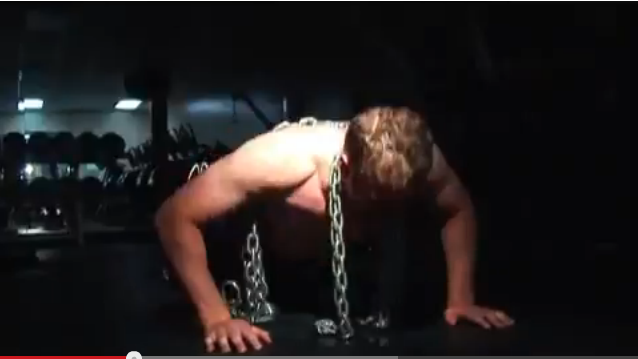
Did you really think I was going to miss the opportunity to post the AMac with chains gif again? You thought wrong.

Islander Defenseman Andrew MacDonald is one of the hot names being bounced around during the trade deadline.  On one hand, this makes sense: He’s making basically nothing on his current contract, he’s one of the time on ice leaders in the NHL this year and has handled top level competition for a few years now.

On the other hand, his conventional fancystats show a well…..massive decline:

AMacThreeYear

Yikes.  That 2013-2014 number is downright terrible, dropping MacDonald into the bottom tier of defensemen.  And no zone starts and certainly not competition (see this article for an analysis of AMac vs various levels of competition) does not account for this.  If you believed the fancystats, AMac isn’t just not a top tier DMan, but not even a 2nd or 3rd pairing guy who could help any team at all.  Yet teams seem to believe he’s worth a high pick?  So what’s going on?  Is the conventional thought completely wrong here?

Continue reading

An Introduction to Analyzing Neutral Zone Data (with Graphs)

Goons like Eric Boulton tend to break Graphs featuring Neutral Zone Data in very……..not-good ways.

A little over 2 years ago, Eric T. introduced us to the idea of tracking play in the neutral zone, in the form of tracking “Zone Entries.”   Zone Entry Tracking is now being done by trackers for a few different teams (Isles, Canes, Ducks, Kings, Sharks, Flyers, Caps, and more here and there) although not most teams’ data has not been collected yet such that people can compare players across teams.

That’s something I’d like to change, so I will be using this space to acquire data from various teams and compare teams and players.  That said, I’d like to explain how we analyze neutral zone data in the first place.

Most Neutral Zone trackers track using a spreadsheet created by Eric, which collects the time, player, and type of each entry.  That sheet compiles the 5 on 5 and 5 on 5 close individual #s of each player (How many entries, What % of entries were via carry, how many shots per type of entry, etc.) and the team.

Using a tool created by Red Line Station (@Muneebalummcu) and with some help from Eric T, we can then use this data to get on-ice data for every player.  This is to me, the real gold mine of neutral zone data – we can see not just how often a player carries in, but how often the opponents do so against him, and whether opponents are carrying it in or instead dumping.   We can also use this data to determine which players aren’t getting it done once the puck is in the offensive or defensive zones, although how repeatable that data is is still in question (More on this in a bit)

There are a few neutral zone stats I think are most worth highlighting: Continue reading

Forecasting Future Goalie Performance with Four Year Hockey Marcels:

Evaluating goalies is hard.  Goalie performance varies more than anything else in hockey and today’s terrible goalie can randomly turn into an elite goalie next season….and then turn back into a terrible goalie.  The best measure we have for evaluating goalies is Save Percentage and so we often tend to use a player’s career SV% as a way of forecasting what to expect from a goalie in the future.

However, it would make more sense not just to take a goalie’s career average SV% when forecasting future performance, but rather to take a weighted average in which we place greater importance on more recent data.  Eric Tulsky recently did this at his must-read blog, Outnumbered, and looked at what weight he should give each recent year’s data to forecast the next three years of a goalie’s performance:

So in my base case, I’m using years 1-4 to try to predict years 5-7. The best predictions came from weighting things like this:

  • Each shot faced in year 3 counts 60 percent as much as shots in year 4
  • Each shot faced in year 2 counts 50 percent as much as shots in year 4
  • Each shot faced in year 1 counts 30 percent as much as shots in year 4

This is particularly similar to the baseball forecasting system invented by Tom Tango, known as the Marcel Forecasting System.  Marcel, named after the monkey, is one of the most basic projection systems possible – it simply weights each of the last three years with weights of 5/4/3, adds a very basic regression to the mean, then adds a very basic aging projection.  Marcel is very basic on purpose – it’s still pretty damn accurate, and if a more complicated forecasting system can’t beat Marcel in baseball, it’s useless.  Surprisingly, most forecasting systems don’t improve upon Marcel by very much.
Continue reading

The Skill of Avoiding Hits


The Elusive Austrian is a species that is apparently incredibly hard to hit on an NHL rink.

One of the most derided statistics tracked by the NHL is the “hit.” This is for good reason – outhitting the opposition generally has no correlation to winning hockey games, what correlation it has at all is basically negative (more hits = less winning, mainly due to more hits meaning you have the puck less), and of course, home trackers are known to massively over-count hits for home teams, with certain rinks being particularly bad.

But what about guys getting hit and avoiding getting hit? Just like Penalties, every play-by-play chart for each NHL game includes both the player doing the hitting and the guy who is being hit (like penalties taken and drawn). Extraskater now actually compiles hits against and hits +/- using these #s. Do these numbers mean anything?

Let’s see if we can answer 4 questions:
1.  Is avoiding getting hit a repeatable skill?
2. Is there a relationship between avoiding getting hit with increased scoring?
3. Is there a relationship between avoiding getting hit and winning the possession battle?
4. Do star players get hit more without an enforcer on the team?
Continue reading

On Guys Who Score But Don’t Drive Possession

This dude didn’t drive possession much, but MAN what a shot.

Consider four types of forwards:

1.  Forwards who don’t drive possession and don’t score points
2.  Forwards who drive possession forward and score points effectively
3.  Forwards who drive possession forward but don’t score points
4.  Forwards who don’t drive possession but score points.

The first two types of forwards are easy to think about: Type 1 forwards are bad players, not really giving value through their play and Type 2 forwards are the best type of players, those who provide value in both offense and defense and aren’t a liability if they ever go on a cold streak.

Type 3 forwards are a little trickier, but really aren’t that hard to think about – they’re your ideal 4th and maybe 3rd liner, the guy who might not score but keeps your team in the game while your better guys rest.

Then you have your type 4 forwards – the dudes who can score a bunch of points but really don’t keep the puck out of your own zone and in the opponent’s zone.  Perhaps these guys are really bad defensively, perhaps they’re completely inept in the neutral zone, or perhaps they’re guys who score mainly by being in front of the net at the right time, and thus aren’t really being helpful when the puck doesn’t come to them.

How do we value these guys?  Depending upon the point totals these guys can put up, we can value them pretty high actually.  Ilya Kovalchuk was a pretty damn good player who didn’t drive possession much, but his scoring almost certainly made up for what he cost the team otherwise.  Matt Moulson’s hands allowed John Tavares to rack up assists due to his amazing ability to be in the right position to put in goals.  Thomas Vanek likewise.

In a sense, these guys are basically role players.  Of course, that role isn’t being a grinder or a checker or some other name for defensive forward, it’s to be an offensive specialist, paying little attention to anything else.  You’d like to play these guys in positions that maximize that ability like any other role player – so high ozone starts, alongside guys who might complement those skills (playing them alongside guys who don’t have these weaknesses, and thus can make their line a plus possession line, is another typical way to handle these guys).  And scoring lots of points is a pretty important type of role for a player to have.

Most of the time, the best scorers don’t fall into this category – the skills involved with being a plus possession player are the same ones that lead to scoring goals – getting the puck into the zone by carry-in, spending more time in the O Zone, etc.  But a few guys will – think Ilya Kovalchuk or perhaps even the more recent version of Alex Ovechkin (though he used to be a clear driver of play).  These are guys you play as much as possible despite the possession problems simply because well – scoring is what wins games in the NHL.  These guys aren’t that common, so you’ll never see a low possession team dominate for multiple seasons like you did in the 80s (when three teams did accumulate such players).  But you play them anyhow and you try and surround them with a lot of plus possession talent to make up for their shortcomings.

Again, these players aren’t bad by any means – they can even be elite!  Of course, lacking possession driving skills means slumps by these guys will kill you, but for your Kovalchuk’s and Ovechkins, you’ll live with that.

Gauging the Relevance of Quality of Competition on a Player’s Stats – Toronto Maple Leafs’ D Edition

In my last post, I detailed how there is a trend of people placing too much importance on the context behind a player’s statistics, even when such contextual numbers do not at all explain the poor (or great) performance.  Part of this is because old research indicated that quality of competition and zone starts have a much greater impact than more recent research has found to be the case.

In particular, the impact of quality of competition is often dramatically overstated.  This is a little understandable – after all, it should matter a lot who is on the ice against a player at a given time.  And in fact it does:

Graph by Eric Tulsky at http://nhlnumbers.com/2012/7/23/the-importance-of-quality-of-competition – a great post that everyone should reread.

But here’s the key thing:  While it matters if a player is facing Sidney Crosby instead of John Scott at any given moment, the range of competition that a player faces over the course of a season is EXTREMELY SMALL.  The gap between the players facing the hardest competition and those facing the weakest competition is the same as facing an average player at most like 4 shot attempts per 60.  In other words, the guy with the toughest competition in the league will face an average opponent who is +2 corsi/60, while the guy facing the weakest will face an average opponent who is -2 corsi/60.  And nearly all players won’t be in these extremes – most will be within -1 corsi/60 and +1 corsi/60.  And as you might expect the gap between opponents who are +1 shot attempts per 60 and those -1 is practically nothing.

Yet you’ll hear people talk about how one player plays “really weak” competition or another player’s bad #s are because he takes “the toughs” – this doesn’t really mean anything.

This can perhaps be illustrated best by looking at Dion Phaneuf and the Maple Leafs’ D Corp:
Continue reading

Overemphasizing Context – A mistake just as poor as explaining context in the first place.

AMac Context

The only context that can explain Andre MacDonald’s performance is if he’s actually wearing these chains under his uniform.

Eric Tulsky frequently points out on twitter that common critiques of analytics people (whether it be hockey or any other sports analytics) tend to act as if those involved with analytics are kind of stupid and have ignored the obvious.  For example, people tend to respond to arguments involving corsi and possession by bringing up the obvious subject of context – “Sure he has a bad corsi, but he gets tough minutes!”  And the general response of course is, yes we have, and we wouldn’t be making these assertions had we not done so.   Hockey Analytics has come up with a multitude of statistics to measure context – Behind The Net alone has 3 metrics for quality of competition and 3 metrics for quality of teammates, plus a measure of zone starts – HA has multiple different measures for the same thing and so does now Extra Skater (with Time on Ice QualComp and QualTeam).

Continue reading