Tactalytics: Using Data to Inform Tactical Neutral Zone Decisions

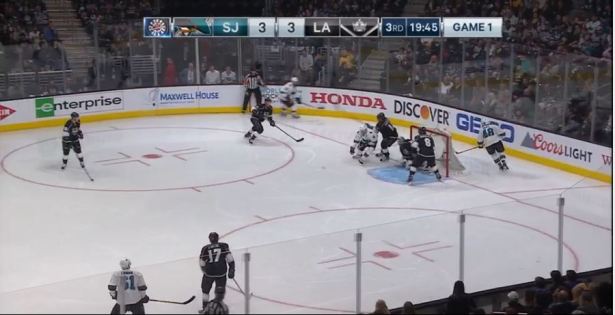
Breakout - Against 2-1-2...2

Last time, I showed how using data and video evidence can be combined to inform tactical offensive zone decisions. Today, I’m going to do the same thing in the neutral zone. Neutral zone play is something that has been a hot topic among analysts for many years, going back to this paper written by Eric Tulsky, Geoffrey Detweiler, Robert Spencer, and Corey Sznajder. Our own garik16 wrote a great piece covering neutral zone tracking. Jen Lute Costella’s work shows that scoring occurs sooner with a controlled entry than an uncontrolled entry.

However, for all the work that goes into zone entries, there have been few efforts to account for how predictable these metrics are. At the end of the day, what matters is how we can better predict future goal-scoring. Also, in looking at our passing data, what can we also learn about how actions are linked when entering the zone? Does simply getting into the offensive zone matter? Does it matter whether it’s controlled or not? Or, does what happen after you enter the zone matter exponentially more? Lastly, what decisions can we make to improve the team’s process using this data?

Continue reading

Practical Concerns: The Analyst’s Plight

Tightrope_walking.jpg

(Image Wikipedia Commons)

Recently, the statistical analyst of an NHL team was let go in the aftermath of an underwhelming regular season and a puzzling decision involving one of the team’s most productive and iconic players. Rights and wrongs aside, the episode illustrated an uncomfortable fact: the analyst’s job is perhaps the most fragile one of all.

Imagine the tightrope walker, balancing him/herself atop a fine metal wire between two buildings. The job is a difficult one on the best of days, requiring a lifetime of practice and undivided focus. Randomness is not the tightrope walker’s friend. A gust of wind, a slight mis-step or even a meeting with an errand low-flying pigeon could yield deadly consequences.

While the physical stakes are different, an analyst’s career prospects (and personal well-being) are similarly affected by things out of his or her control. While job security in any field is dependent on market conditions, things are especially dire for the technical worker responsible for uncovering Truths, but ranked too low in the corporate hierarchy to effect real change.

Continue reading

Tactalytics: Using Data to Inform Tactical Offensive Zone Decisions

SJ_BTN_Pic_2

Much of the gains made in the field of hockey analytics has to do with player evaluation and roster construction. Identifying and quantifying a player’s on-ice shot differential while accounting for the context (score state, quality of teammates, quality of competition, deployment, etc.) is something the community has largely been successful at doing. When teams sign or trade for a player, we’re at a good enough place to determine if that was a positive or negative signing, for the most part. There have even been improvements in scouting and drafting that are analytical in nature.

However, we still are lacking in areas of quantifying a team’s system and how they play. We have made strides concerning two important phases of the game, namely the work done here on zone entries by Eric Tulsky, Geoffrey Detweiler, Robert Spencer, and Corey Sznajder, and also work done here by Jen Lute Costella on zone exits. These two pieces, among others written on these subjects, demonstrate a data-driven approach that can influence the tactical decisions a team can make on the ice. However, these are isolated incidents at the blue lines and structured play in the offensive zone remains difficult to quantify.

I attended the NHL Coaching Clinic held in Buffalo, NY the day before this year’s draft. During a presentation from Davis Payne, an assistant coach with the Los Angeles Kings, I noticed two distinct plans of attack being demonstrated and wanted to quantify them as best I could with our passing data. The decision on how to set up and attack in the offensive zone is largely determined by the coach. They will establish a structure within which their players have some latitude to create offense. Rarely do we see this aspect of the game quantified as it’s incredibly fluid and difficult to pin down. However, today we’re going to do just that.

Continue reading

Neutral Zone Playing Styles

Player A is a sniper. Player B is a playmaker. Quick: If the two of them get a 2-on-1 break, what do you expect each of them to do? Odds are you would expect the playmaker to pass and the sniper to shoot. You may not know how good each of these players is, but the monikers give you a rough idea of this player’s relative strengths and how they generally try to succeed.

We have plenty of different names that explain a player’s general “role”. We use words like sniper, dangler, two-way player, and power forwards (even if we can’t agree on what that last one actually means). However, these names are usually limited to the offensive zone. We have no easy way to describe what a player does in the neutral zone.

Continue reading

Entry Generation and Suppression

Intro

Hockey analysts have repeatedly shown the value of neutral zone play. If a player performs well in the neutral zone, he or she is helping generate offense for their team and limiting the opponent’s chances. In addition, neutral zone play is repeatable, and the player is likely to continue to drive possession for their team. If you can identify players who thrive in the neutral zone, you are in a position to help your team improve.

But while neutral zone play is important, we still have a very limited understanding of it. Between the distance from the goal, the fluidity of play, and the relative scarcity of data, most people don’t know how players perform in the middle third of the ice. Furthermore, we don’t even have a complete idea of how to make those evaluations. When figuring out how good a player is in the neutral zone, should offense and defense be evaluated separately, or are overall results enough? What skills translate to strong neutral zone play? What playing styles?

Continue reading

Practical Concerns: On Anchoring, Delight And The Frederik Andersen Contract

Embed from Getty Images

One of the things I am trying to work on this summer is to be more self-critical about the way I treat and act on information. Frederik Andersen’s trade from the Anaheim Ducks to the Toronto Maple Leafs, and his subsequent signing of a five-year, $25 million contract proved to be a good opportunity in that sense.

Initially, I cringed a bit at the term and cap commitment Toronto made to Andersen. Five years is a long time and $5M per year is a big money for a guy who is not guaranteed to play all that well.

But I could be very wrong on that.

Continue reading

Introducing Player Radar Charts

RadarPost

For the soccer fans on hockey twitter, you’ve likely come across Ted Knutson. Several years ago, Ted introduced radar charts for player evaluations across the five major soccer leagues. At the time, I was busy tracking passes and other things on the New Jersey Devils, but always wanted to have something like that for hockey. So, I finally got around to doing it. Links to the Forward and Defense charts are at the bottom, so skip down if you just want to access those.

Continue reading

Video Analysis: How The Penguins Extend Zone Time With “Total Hockey”

2016-06-10_11-49-55.png

By any predictive metric, the Pittsburgh Penguins have generated a staggering amount of offense against the San Jose Sharks in the Stanley Cup Finals. Earlier this week, we looked at how the Penguins are able to create possessions with good defensive habits in the neutral zone. Today, we’ll examine how they create a volume of offensive chances via positional switches.

To fully understand the ideas behind the Penguins’ offensive zone play, it is necessary to study the “Total Football” philosophy:

2016-06-10_11-51-48

The line of thinking lends itself well to the speed and teamwork-oriented nature of hockey as well. While the Penguins are by no means the first team to apply these ideas, they are a good example of how they can be used effectively at the highest level of the game.

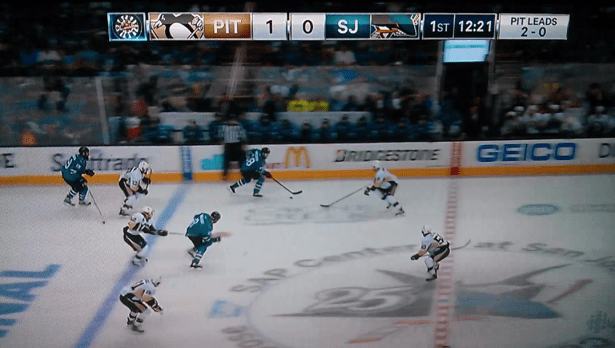
Here are some clips from Game 3 and Game 5 of the Stanley Cup Final illustrating the tactical benefits of fluidity and positional switches.

Continue reading

NHL Draft Probability Tool

donnie

SUNRISE, FL – JUNE 27: the Boston Bruins during the 2015 NHL Draft at BB&T Center on June 27, 2015 in Sunrise, Florida. (Photo by Dave Sandford/NHLI via Getty Images)

The annual NHL draft has become a great source of entertainment for fans. Since teams make player selections based on a combination of game theory and data, the draft is also a fertile ground for analysts as well. Game theory specifically is the foundation for the Draft Probability Tool that will be presented in this piece. It will help you explore how teams should approach the draft strategically: if you’re interested in a specific player, do you need to trade up or down to get him? How much should you be giving up or asking for? How far should you trade up or down to still get the player you value highly? This tool helps answer those questions.

Continue reading

Video Analysis: In the Penguins-Sharks Stanley Cup Final, Possession Starts With Good Defensive Gap

2016-06-06_18-49-40.png

In the playoffs, details make the difference.

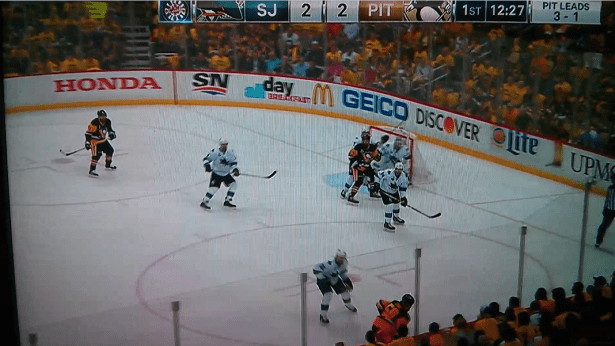
Heading into Game 4 of the Stanley Cup Final, the Pittsburgh Penguin have had the measure of the San Jose Sharks in terms of shot differential. Looking at the game tape, we can see that one of the contributing factors is the way both teams defend the rush.

As a group, the Pens’ defensive corps is fleet-footed and blessed with good offensive acumen. They are also undersized and prone to being muscled off the puck by San Jose’s skilled forwards. In order to minimize their exposure to defensive-zone breakdowns and to maximize the team’s speed and skill, the Penguins have been playing a very tight gap across the neutral zone, funneling San Jose puck carriers toward the end boards and standing up at the red line in order to encourage the Sharks to dump the puck in.

A hallmark of the Mike Sullivan-coached Penguins is the team’s attacking mindset on and off the puck, as evidenced by the way they suppress the San Jose transition game.

Continue reading