The Hockey Graphs Podcast (EP 4): Correlation of Sour Cream

unnamed

Welcome to the fourth episode of the Hockey Graphs podcast, where Rhys Jessop (of Canucks Army and That’s Offside) and Garret Hohl continue talking about hockey while learning how to podcast. Join us as we talk about the Super Bowl, random correlations, Michael Hutchinson, save percentage, Zach Kassian, the Vancouver Canucks soon to become big trade, and other random thoughts. Continue reading

The Hockey Graphs Podcast (EP 3): Hot Dogs = Sandwiches

unnamed

Welcome to the third episode of the Hockey Graphs podcast, where Rhys Jessop (of Canucks Army and That’s Offside) and Garret Hohl continue talking about hockey while learning how to podcast. Join us as we lament the death of Corsi. We also talk about Mike Richards hitting the waiver wire, All-Star game, and (as always) some prospects and draft theory. Continue reading

What if statistics chose the All-Star lines?

Screen shot 2015-01-25 at 2.03.38 AM

No, not roster. Lines. This won’t be a discussion of hits and misses for the rosters.

While usually Hockey-Graphs tends to stay in the more serious and analytical side of sports statistical writing, I thought “why not have a little fun” since that’s what the All-Star break is supposedly about.

How would one shape the line ups for tonight if the best (minus some missed calls and injured) in the business were designed by statistical analysis (with a pinch of old-school eye-test)? Continue reading

The Hockey Graphs Podcast: Episode 2

qe7ScKvj

Welcome to the second episode of the Hockey Graphs podcast, where Rhys Jessop (of Canucks Army and That’s Offside) and Garret Hohl continue talking about hockey while learning how to podcast. Join us as we discuss the CSS rankings, Vancouver Canucks, Winnipeg Jets, Toronto Maple Leafs, the NHL’s disciplinary practices, and the up coming All-Star game. Continue reading

The relationship between Corsi% and winning faceoffs.

Faceoffs have always been an interesting area of research. There have always been individuals in the media and public who extol faceoffs importance; I have even heard quotes like: puck possession is so important and you cannot win the puck possession battle if you are starting without the puck.

Not too long ago Gabriel Desjardins showed that the impact of a faceoff is real (as one would expect) but likely over glorified by some. One example from his study showed shot rates after an offensive zone faceoff:

From these numbers Desjardin estimated an impact of +2.45 goals for every 100 non-neutral zone faceoff wins over 50%, and +3.66 for every 100 for special teams. A real impact, but not overly huge impact. Neutral zone faceoffs carried even less of an impact with +0.90 goals for every 100 faceoffs over 50%.

But what about faceoffs overall relationship with possession? Continue reading

The Hockey Graphs Podcast: Episode 1

qe7ScKvj

Welcome to the inaugural episode of the Hockey Graphs podcast, where Rhys Jessop (of Canucks Army and That’s Offside) and Garret Hohl navigate the wonderful world of podcasting for the first time ever. Join us as we discuss Vancouver Canucks and Winnipeg Jets prospects, what the hell is up with the Anaheim Ducks, and, of course, a healthy dose of fancystats. Continue reading

One of the many issues with the Toronto Maple Leafs

Screen shot 2015-01-08 at 10.32.59 AM

Rand Carlyle was recently fired from the Toronto Maple Leafs. This brought joy to many online Leaf fans as many –legitimately– believed Carlyle to be a source of the Maple Leafs consistently being out shot, out possessed, and out chanced.

Of course, Carlyle was not the difference between the Leafs spontaneously becoming a contender in the east. There are issues with the Maple Leafs that will take some time for Brendan Shanahan and company to fix. Continue reading

Back to Basics: Forward Univariate Analysis

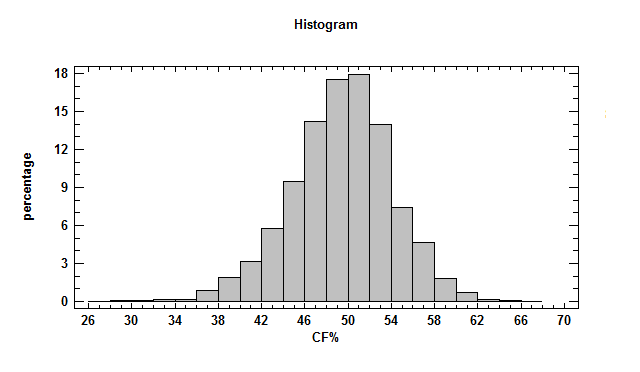
Uni - CF%2League wide univariate analysis isn’t very sexy, which is why you rarely see it used in the hockey blogosphere. Still, the information is necessary in better understanding what we are describing and adding context. It is also useful for looking back at whenever a variable may not impact or work in a model as you initially hypothesize.

I gathered all player season data for each full (excluding lockout) season available in the “Behind the Net era”, filtering only forwards with 100 or more minutes. These seasons were combined into one massive sample of 2368 player seasons. Continue reading

Draft & Develop: How analytics can be combined with qualitative scouting

NHLe1

The graph above represents how some may look at and use hockey statistics; the better a player performs in a statistic equates to more skill. This practice can be found in league equivalencies -now more commonly known as NHL equivalencies (or NHLe)- originally contrived here by Gabriel Desjardins.

In truth, almost all of us can be guilty of this at one point or another, like when using evidence like “Player A has a better Corsi%; therefore, he is pushes the play better”. Most reasonably understand that this is not how it works, but it is not discussed often enough. These tools are used to show average expected outcomes. The output is not the only possible outcome.  Continue reading

The State of Save Percentage

Image from Wikimedia commons

Currently save percentage is the single best statistic for evaluating goaltenders… which is unfortunate as save percentage is extremely rudimentary and a suboptimal statistic.

There are two important factors for a statistic to be useful: that it impacts wins and the individual can either control or push the needle. Save percentage has both. Continue reading